

When families start thinking about ISEE or SSAT preparation, their first instinct is usually to reach for a word list. While word lists have their place, there’s a layer of verbal reasoning performance that word lists alone can’t build. This is one of the most important factors in how a student performs on test day: the deep, almost automatic familiarity with language that comes from years of reading widely and often.
This isn’t a flashy preparation strategy. It doesn’t even feel like prep. That’s exactly what makes it so easy to overlook, and even more worth talking about.
Most Vocabulary Isn’t Learned by Studying It
Watermelon Math: Surprisingly Sweet Test Prep.™
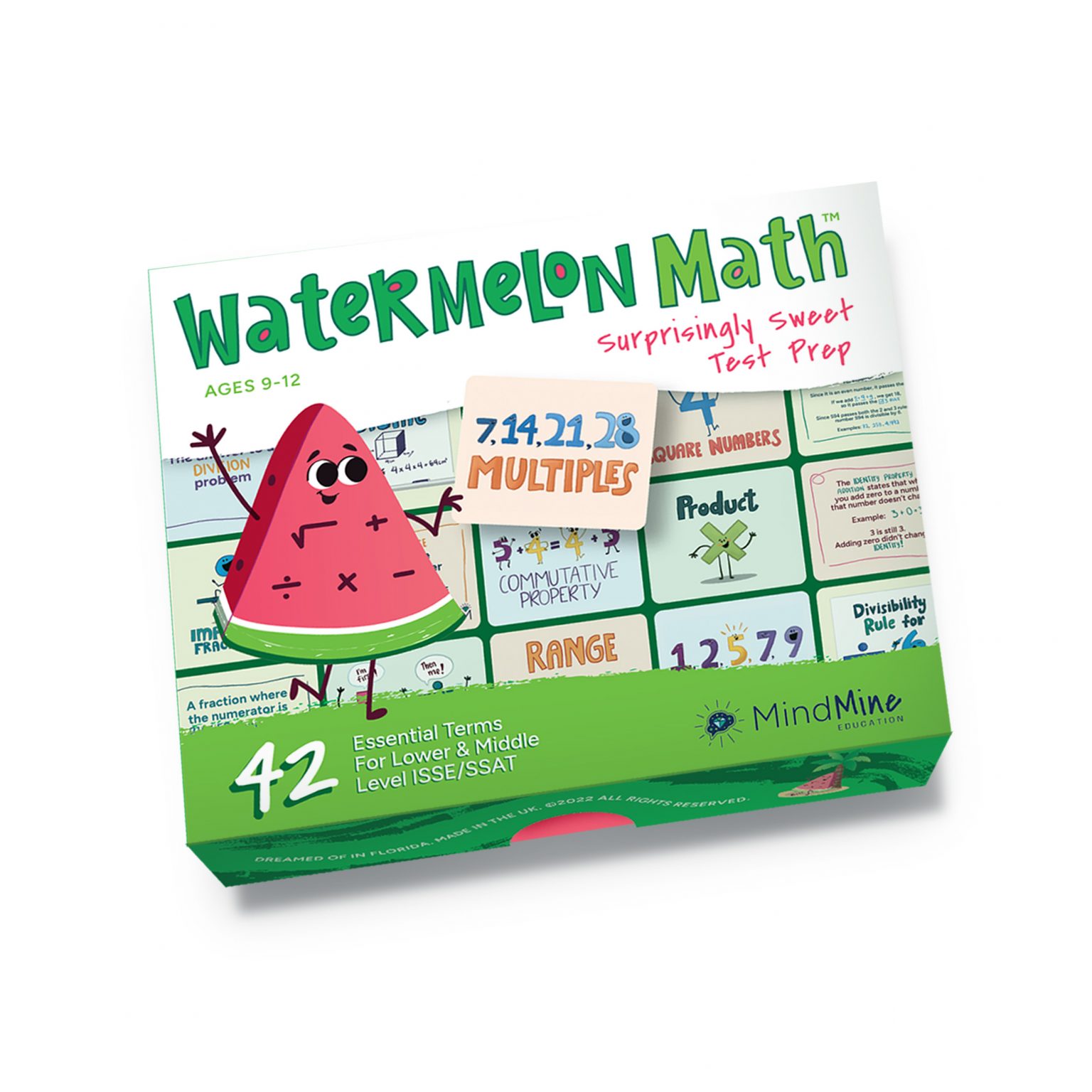
42 full-color math concept cards for ISEE prep
$23.95
Shop Now16 Timed Sets for the Lower Level ISEE
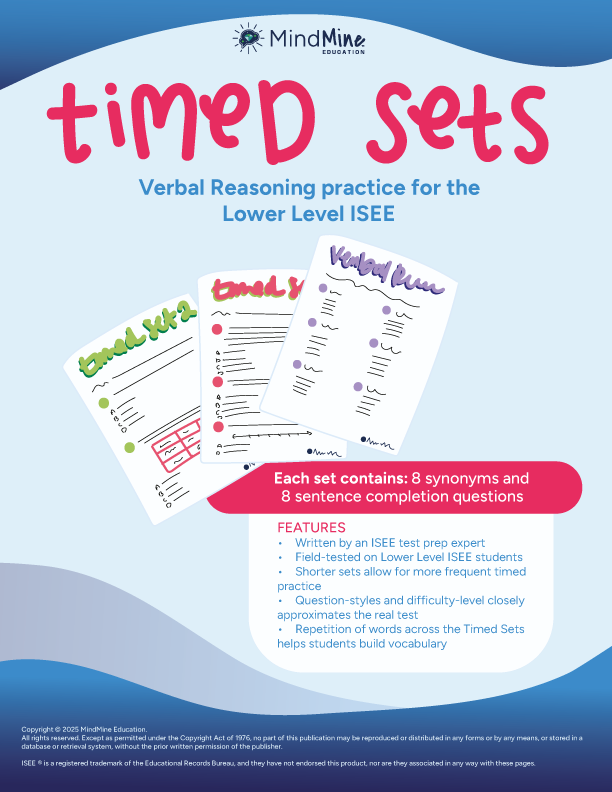
Verbal Reasoning practice sets with real test pacing
$12.50
Shop NowLower Level ISEE Verbal Reasoning Practice

Standalone practice section download
$5.00
Shop NowResearch consistently shows that the majority of vocabulary growth happens not through direct instruction but through incidental exposure, picking up words naturally while reading, listening, and engaging with language in context.
According to Reading Rockets, a literacy resource backed by research from the National Reading Panel, students acquire vocabulary naturally through rich oral-language experiences and by reading widely on their own. Reading volume is one of the most significant factors in long-term vocabulary development.
What this means practically is that a student who has read a lot across many years has encountered thousands of words in context, including many of the elevated, above-grade-level words that appear on the ISEE and SSAT verbal sections. They may not be able to define every word formally, but they’ve seen it used in a sentence, felt how it fits into a passage, and absorbed its approximate meaning without ever sitting down to study it. That kind of familiarity doesn’t come from a prep course. It accumulates over time.
Related: The Most Common Verbal Reasoning Mistakes Students Make

Reading Builds More Than Vocabulary
Wide reading does something else that’s harder to measure but just as valuable: it trains a student to move through text comfortably and quickly. Students who read regularly for pleasure tend to be more fluent readers, which means they spend less effort on the mechanical act of reading and have more mental energy available for reasoning through what the text is actually saying.
On the verbal reasoning sections of both the ISEE and SSAT, efficiency matters. Sentence completion questions require a student to absorb the logic of a full sentence before selecting a word that completes it correctly. Synonym questions reward students who’ve encountered a word in multiple contexts and understand its range of meaning. Both question types favor students who are comfortable with language at a high level, not just students who’ve memorized definitions.
As Kelly notes in the MindMine Education blog on reading comprehension, even strong readers can find the ISEE and SSAT reading sections challenging because they demand a different kind of reading than students do for school or pleasure. But a student who reads a lot has a much shorter distance to close. The mechanics are already there. The adjustment is one of strategy, not stamina.
Related: Turning Test Anxiety Into Test Readiness for Private School Applicants

Genre and Variety Matter
Not all reading builds the same skills at the same rate. A student who reads exclusively in one genre, say fantasy novels or graphic novels, is getting real value from that reading. But a student who also reads nonfiction, biography, science writing, or literary fiction is being exposed to a much wider range of vocabulary, sentence structures, and tonal registers.
The verbal reasoning sections of admissions tests draw from exactly that kind of range. Passages can be formal or informal, scientific or literary, old-fashioned in phrasing or contemporary in style. A student who’s comfortable moving across different kinds of text will feel more at ease with whatever the test puts in front of them.
This doesn’t mean steering reluctant readers toward books they hate. It means, wherever possible, expand the reading diet gradually. A student who loves sports writing might be open to longform journalism. A student who loves fantasy might enjoy historical fiction. The specific path matters less than the direction.
Related: Building a Strong Vocabulary Foundation in the Years Before Testing

What Families Can Do Right Now
The most important thing families can do in the years before testing isn’t to buy a vocabulary workbook. It’s to protect time for reading, make books accessible and visible in the home, and model reading as something adults do too.
If your child is already a strong reader, the work is largely happening on its own. Encourage variety and don’t be too quick to redirect them away from a book they’re absorbed in, even if it seems too easy. Easy, pleasurable reading at volume still builds the vocabulary and fluency that verbal reasoning rewards.
If your child is a reluctant reader, that’s worth addressing well before formal test prep begins. Finding the right book, the right format (audiobooks count), or the right reading environment can make a real difference. A student who reads regularly, even a little, over several years will walk into verbal reasoning prep with a stronger foundation than one who hasn’t.
At MindMine Education, verbal reasoning preparation builds on whatever foundation a student already has. The stronger that foundation, the more efficiently the formal prep work can do its job. If you’d like to know where your child currently stands, the ISEE Readiness Audit is a practical place to start. And if you have questions about how to set your child up well in the years before testing, reach out. It’s never too early to think about this.
Reference:
- Reading Rockets. Teaching Vocabulary. readingrockets.org. https://www.readingrockets.org/topics/vocabulary/articles/teaching-vocabulary
Related:
- Turning Test Anxiety Into Test Readiness for Private School Applicants
- Building a Strong Vocabulary Foundation in the Years Before Testing
- The Most Common Verbal Reasoning Mistakes Students Make
