

The verbal reasoning section of the ISEE is one of the most misunderstood parts of the test. Parents often assume it is a straightforward vocabulary quiz. Students often assume that if they have studied their word lists, they are ready. Then test day arrives, and neither assumption holds up as well as they’d hoped.
The truth is that synonyms and sentence completion questions are designed to test reasoning alongside vocabulary, and students perform very differently under pressure than they do during a calm study session at home. Understanding exactly where students tend to stumble makes it much easier to address those gaps before the exam.
Synonyms: The Question Type That Looks Easier Than It Is
On the surface, a synonym question seems simple. Pick the word closest in meaning to the one given. Students who have studied vocabulary feel confident going in, and then find themselves second-guessing choices on words they thought they knew.
A few things cause this.
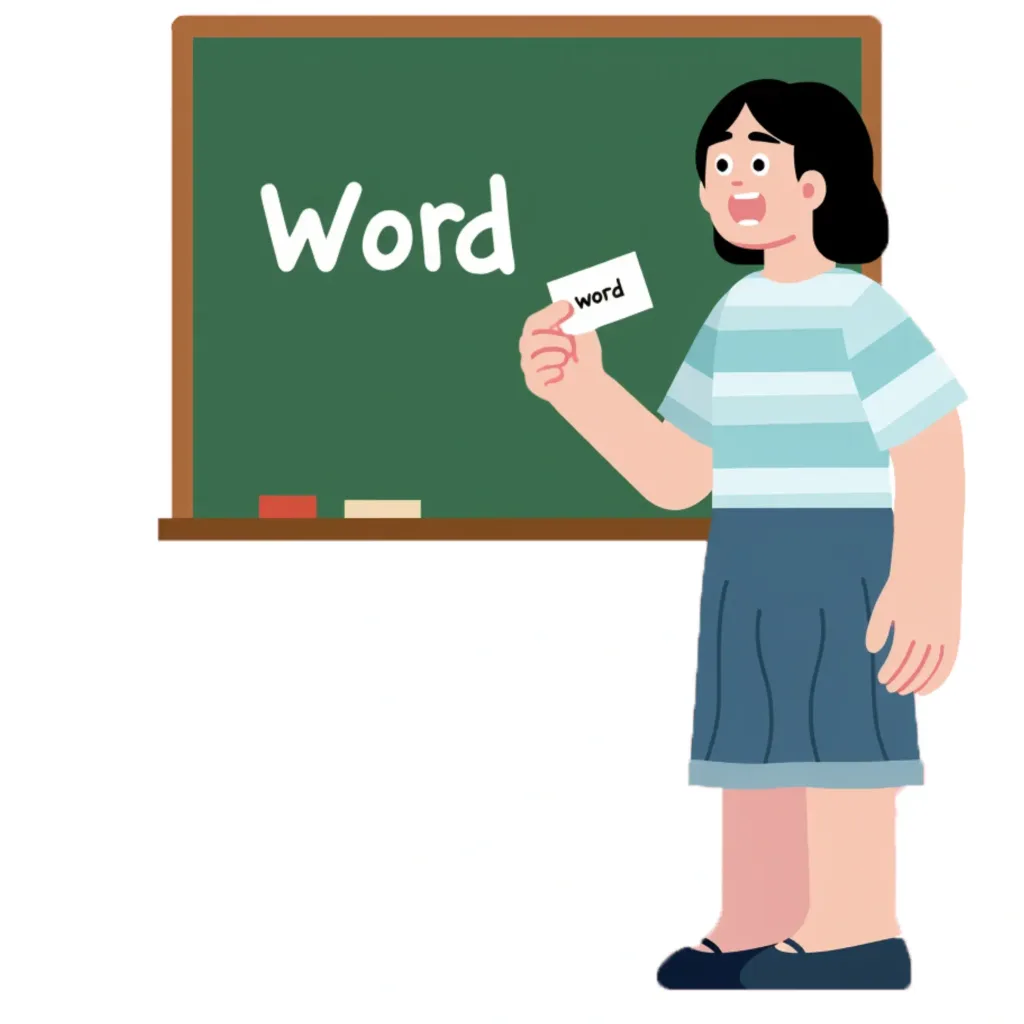
- Words with more than one meaning. Many high-frequency test words carry multiple definitions, and the one a student knows best is not always the one being tested. A student who knows “grave” as a burial site may not immediately think of it meaning serious or solemn. A student who knows “novel” as a book may overlook it as an adjective meaning new or original. The test is not trying to trick anyone, but it does reward students who have considered a word from multiple angles rather than memorizing a single definition.
- Choosing the first answer that feels close enough. Under time pressure, students gravitate toward the answer choice that feels familiar rather than reading all four options. This habit is costly on synonym questions because the correct answer is often not the most obvious-sounding word. It is the word with the most precise relationship to the original.
Reading every choice before committing is a small habit that protects a meaningful number of points.
- Unfamiliar words with no fallback strategy. The verbal reasoning section of the ISEE is intentionally built to include above-grade-level vocabulary. According to ERB, the ISEE is designed to measure not just what students know but how they think. That means encountering an unfamiliar word is not a failure of preparation. It is part of the test design. Students who have no strategy for unfamiliar words beyond guessing randomly will lose points that a student with word-root knowledge or elimination skills could recover. Breaking a word into its root, prefix, or suffix, and using that to narrow down the answer choices, is a learnable skill that pays off reliably.
Related: ISEE vs SSAT: Understanding the Difference for Your Family
Watermelon Math: Surprisingly Sweet Test Prep.™
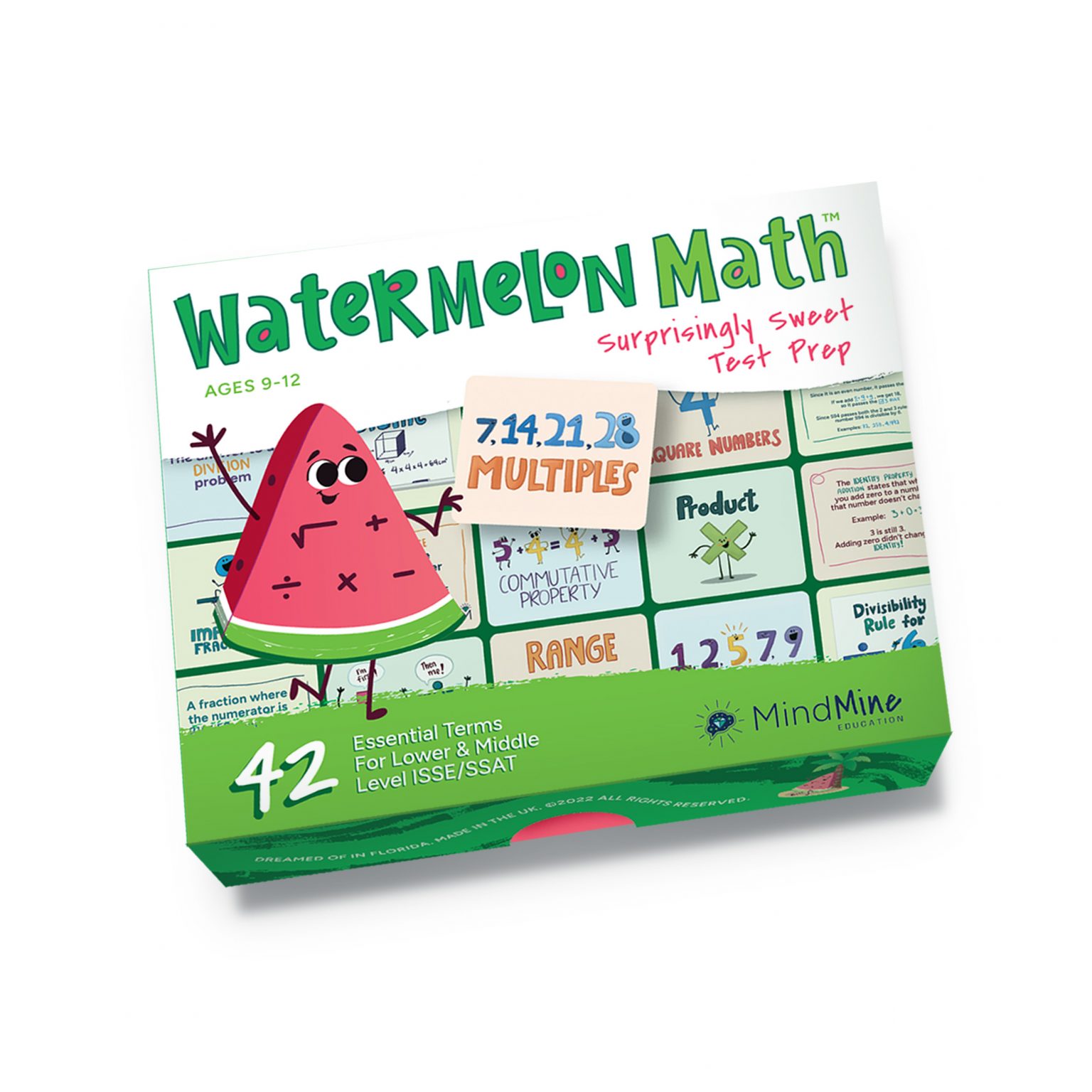
42 full-color math concept cards for ISEE prep
$23.95
Shop Now16 Timed Sets for the Lower Level ISEE
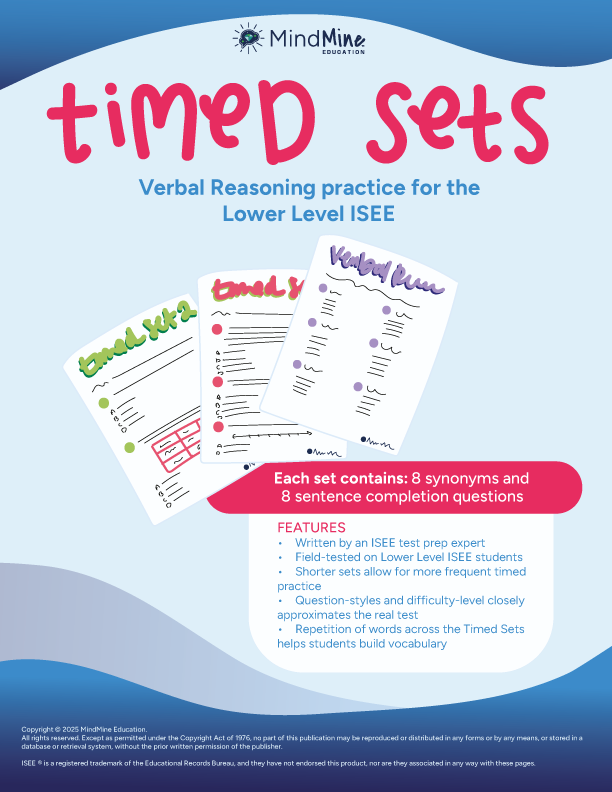
Verbal Reasoning practice sets with real test pacing
$12.50
Shop NowLower Level ISEE Verbal Reasoning Practice

Standalone practice section download
$5.00
Shop NowSentence Completions: The Question Type That Requires Slowing Down
Sentence completion questions ask students to choose the word or words that best complete a sentence. The sentence itself contains the clues. Students who rush, or who go straight to the answer choices before working through the sentence, tend to pick answers that sound plausible rather than answers that are logically correct.
A few patterns show up repeatedly.
- Ignoring contrast and logic signals. Words like “although,” “despite,” “however,” and “yet” are doing important work in a sentence completion question. They signal that the blank should contrast with something else in the sentence, not extend it.
A student who reads quickly and misses these signals will select an answer that fits the tone of the sentence but not the logic. Slowing down to identify what the sentence is actually doing structurally is one of the most reliable ways to improve accuracy on this question type.

- Using tone instead of logic. Some students make their choice based on how a word sounds in the sentence rather than what the sentence is actually saying. A word can feel right without being right. The correct answer has to make logical sense given the full sentence, including any contrast signals, cause-and-effect relationships, or descriptive clues the sentence provides. Eliminating choices that do not follow the sentence’s logic, even if they sound reasonable, sharpens the decision significantly.
- Running out of time on harder sentences. Sentence completion questions vary in difficulty. Some sentences are short and direct. Others are long and layered, with multiple clauses that each carry meaning. Students who spend too long on a difficult sentence early in the section often rush through easier ones later, missing questions that were well within their reach.
Practicing with a timer and building the habit of moving on when stuck protects the easier points further down the page.
Related: The Most Common Verbal Reasoning Mistakes Students Make
The Shared Problem Underneath Both Question Types
Whether the stumble happens on synonyms or sentence completions, the root cause is usually the same: students treat the verbal reasoning section as a vocabulary test and stop there. As Kelly notes in the MindMine Education blog, the verbal reasoning section is not simply a vocabulary test. It measures how well a student can navigate unfamiliar territory using the tools available to them, word knowledge, context, logic, and elimination.
Students who develop these reasoning habits alongside their vocabulary practice are consistently the ones who perform well, not because the test got easier, but because they stopped being surprised by it.
If your child is preparing for the ISEE and you want to understand where they currently stand on verbal reasoning, our ISEE Readiness Audit is a practical starting point. If you are ready to build a preparation plan around their specific needs, reach out and we can talk through what that looks like.
References:
- Educational Records Bureau. ISEE by ERB. erblearn.org. https://www.erblearn.org/families/isee-by-erb/
- Educational Records Bureau. Tips for Every Section of the ISEE. erblearn.org. https://www.erblearn.org/blog/tips-for-every-section-of-the-isee/
Related:
- ISEE vs SSAT: Understanding the Difference for Your Family
- The Most Common Verbal Reasoning Mistakes Students Make
