

It’s one of the first questions families ask, and it’s a good one: when exactly should we start?
The honest answer depends on a few things, including your child’s current academic baseline, which test they’ll be taking, and when they plan to sit for the exam. But there’s a principle that holds across almost every situation: earlier is better, and the families who start with enough runway tend to feel far more in control of the process.
Here’s a clear breakdown of how to think about timing.
Understand How the Testing Calendar Works
For the ISEE, the ERB divides the year into three testing seasons: Fall (August through November), Winter (December through March), and Spring/Summer (April through July). Students may test once per season, which means there are at most three opportunities per year. Most families applying for the standard fall admissions cycle aim to test in the fall testing season, with winter as a possible second attempt if needed.
The SSAT follows a similar rhythm. Knowing your target test date and working backward from there to set a start date is the most practical way to build a preparation plan that doesn’t feel rushed.
Watermelon Math: Surprisingly Sweet Test Prep.™

42 full-color math concept cards for ISEE prep
$23.95
Shop Now16 Timed Sets for the Lower Level ISEE
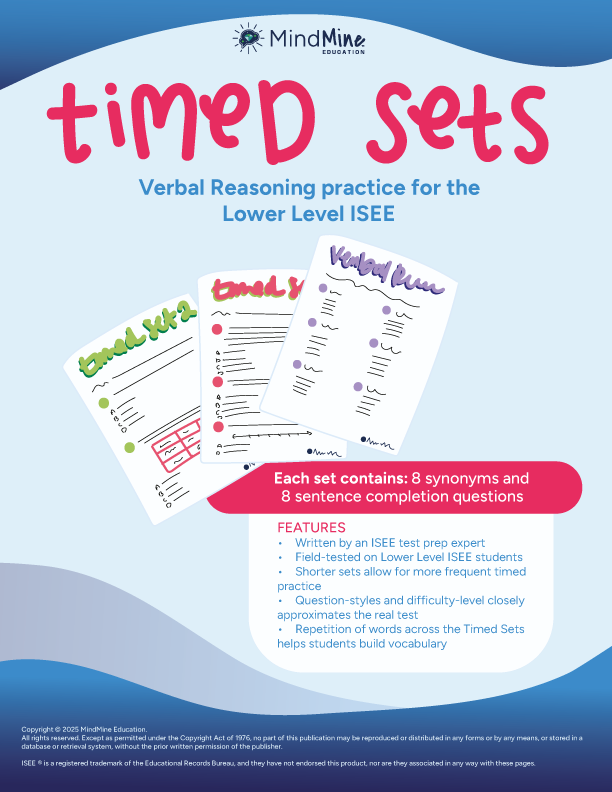
Verbal Reasoning practice sets with real test pacing
$12.50
Shop NowLower Level ISEE Verbal Reasoning Practice

Standalone practice section download
$5.00
Shop NowSix Months Is a Strong Starting Point, But Earlier Has Real Value
For most students, beginning structured preparation about six months before their planned test date gives enough time to build skills steadily, identify weak areas, and practice under realistic conditions without burning out. For the standard fall testing window, that means starting in the spring.
But six months is a floor, not a ceiling. Vocabulary growth, in particular, responds to sustained exposure over time. Reading widely, building word knowledge, and developing strong reasoning habits aren’t things that can be compressed into a few weeks of intense study. The earlier a family begins weaving these habits into daily life, the better positioned their child will be when formal prep begins. Skills like these compound over months and years, not weeks.
Related: Why Synonyms and Sentence Completions Trip Up So Many Students

Earlier Timelines Protect Your Options
One underappreciated reason to start early is flexibility. A student who begins preparing in the spring has time to take a diagnostic exam, identify gaps, work through them methodically, and still have room for a second testing season if the first attempt doesn’t go as well as hoped.
A student who begins in October for a November test date has almost none of that flexibility. If the diagnostic reveals significant content gaps, there’s very little time to address them before the exam, and the retesting window means waiting several more months. Starting early isn’t about pressure. It’s about having choices and adequate preparation.
The Right First Step Is a Diagnostic Exam
Regardless of when a family begins, the smartest first move is a diagnostic exam. Sitting for a full practice test under realistic conditions gives a clear, honest picture of where a student currently stands, which sections need the most work, and helps define the prep timeline. It also helps calibrate expectations before families commit to a plan.
This is exactly how MindMine Education approaches the start of every tutoring engagement. The diagnostic doesn’t just identify content gaps. It reveals test-taking habits, pacing patterns, and areas of strength that can be built on. From there, a preparation plan can be tailored to what the student actually needs rather than a generic outline.
If the idea of a full diagnostic feels like too much pressure for a child who’s already anxious about the process, that’s a real consideration. The starting point should set the child up for productive work, not discourage them before prep has even begun. That balance is worth discussing before jumping straight into practice tests.
Related: Building a Strong Vocabulary Foundation in the Years Before Testing

Different Students Need Different Timelines
There’s no single right answer for every child. A student with strong reading habits, an above-average vocabulary, and solid math foundations may need less structured prep time than a student who’s encountering above-grade-level content for the first time. A student who’s anxious about tests may benefit from a slower, more gradual ramp-up. A student preparing for the Upper Level ISEE or SSAT, which covers more advanced content, generally needs more runway than a Lower Level student.
What matters most is starting with an accurate picture of where your child is, not where you hope they are, and building from there.
Related: ISEE vs SSAT: Understanding the Difference for Your Family

A Note on Younger Students
For families with children in fourth or fifth grade who are beginning to think ahead about admissions to middle school, the most valuable thing isn’t formal test prep. It’s building the habits that make test prep more effective later: reading widely and often, developing genuine curiosity about language and ideas, and maintaining a positive relationship with learning. These foundational investments pay dividends that no last-minute preparation program can replicate.
If you’re wondering whether your child is ready to begin more structured preparation, the ISEE Readiness Audit at MindMine Education is a practical place to start. It gives families a clearer picture of where their child stands before making any decisions about timing or approach. And if you have questions about how to plan ahead, reach out and we can talk through what makes sense for your family.
References:
- Educational Records Bureau. ISEE by ERB: Testing Seasons and Registration. erblearn.org. https://www.erblearn.org/families/isee-by-erb/
- Enrollment Management Association. SSAT Test Dates and Registration. ssat.org. https://www.ssat.org/testing/test-dates
Related:
- Why Synonyms and Sentence Completions Trip Up So Many Students
- Building a Strong Vocabulary Foundation in the Years Before Testing
- ISEE vs SSAT: Understanding the Difference for Your Family
